The Vision Of The Founder
One who wanders the streets of Kiryat Sanz, Netanya today is enchanted by the charm of the place and its residents. It's an amazing self-subsistent community containing everything that one should need from birth onwards. Today, sixty-four years after it was founded on the shores of Netanya, it looks strong and settled, and is graced by various enterprises that give it a large measure of independence.
Visitors to the Kiryat can't help but express their amazement: How did all this come into being? Who was the Rebbe of Sanz-Klausenberg, of blessed memory, the personality that contained so much energy, vision, motivation, and foresight needed to create such a multi-faceted Torah enterprise? To understand this, we have to go back in time, to an era that passed and vanished with the tempest of World War II.
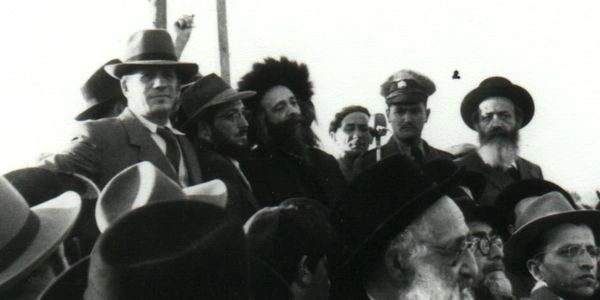
During those dark days, when the Jewish people in Europe were being tortured and in danger of extinction, the Rebbe found no rest and felt severely the suffering of the nation. Their pain was his pain, and he himself felt the fires of the burning inferno of the cruel Nazi hell, in which he lost his righteous wife and eleven children. Nevertheless, when the first rays of liberty began to flicker, he appeared in all his vigor, shaking off the dust of mourning and kindling the light of Judaism amongst the survivors.
In that horrible time, torn and shattered, while Jewish blood still boiled on Europe's soil, the Rebbe was the only one who took the initiative and appeared exactly at the right time. The Rebbe was the spiritual shepherd and physical father of the many miserable survivors; he comforted the broken and devastated; he built them homes and raised the Torah from the ashes.
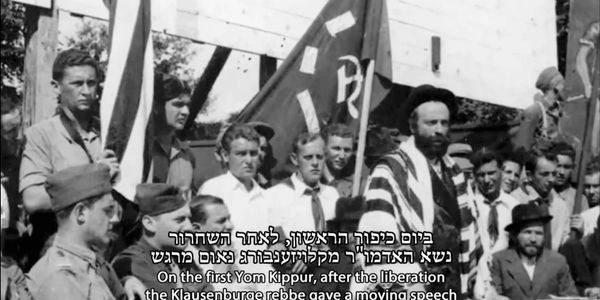
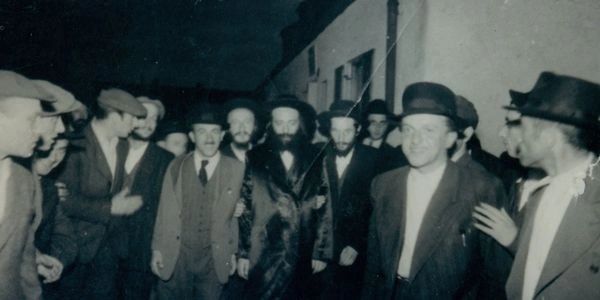
He didn't take his own personal matters into consideration; his whole life, day and night, was dedicated and sacrificed for the sake of the people. He gathered unto himself thousands of stranded orphans that remained after the deluge — living remains and firebrands rescued from the inferno — and cared for them with boundless love and dedication. He cared for all their deficiencies, both spiritual and physical, and established for them shelters and Torah and educational institutions while still in the desolate wasteland of the survivors of the sword and hunger, even whilst in the refugee camps of defeated Nazi Germany.
As he went from city to city and from camp to camp he became the torch that spread light in the sea of darkness, the symbol of hope and encouragement to the depressed and discouraged survivors. Everyone looked to him for help and he conquered their hearts with Torah and faith in G-d.
As most of the survivors emigrated out of Europe, especially to America, the Rebbe decided that he too would emigrate to America, as he felt intense responsibility for his brothers wherever they should be. His stay in America was short. Looking back one could say that this was preparation time for his immigration to the Land of Israel.
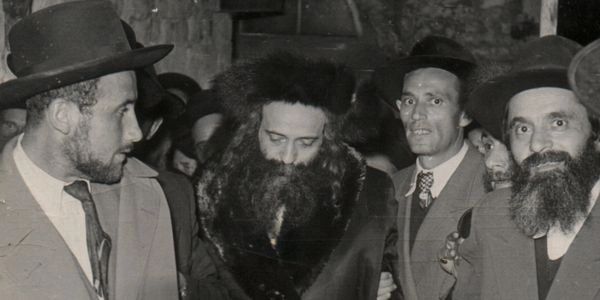
The appearance of the Rebbe in America caused a tremendous spiritual awakening. His charismatic personality attracted not only the Holocaust survivors, but also the long-settled local Jews who were searching for spiritual support in the cold and detached spiritual climate that plagued so much of Jewish America for generations.
However, his eyes were trained to the Land of Israel, the Holy Land, out of faith in the promise of the prophets, that "Mount Zion will be a refuge and it will be holy." Even at that period in time he was already preparing the plans for his greatest venture — the establishment of "Kiryat Sanz" and its enterprises. He saw it as his life-mission, to establish a Hassidic community on the holy soil, a place that would serve as a warm and quiet enclave, closed off from foreign influences, where Torah life, Hassidism, and chesed could be nurtured.
Not much time passed and the dream became a reality of glorious proportions. The Rebbe immigrated with joy to the Holy Land and laid the corner stone of the magnificent kingdom: "Kiryat Sanz Netanya", which overcame the difficult birth pangs of its inception, and lives, breathes, flourishes and renews itself.
With his passing, on Shabbat Parshat Hukat, 9 Tammuz 5754, the great light of Sanz Hassidism and Kiryat Sanz was darkened. Our consolation can be found in his dear son who succeeded him, our master the Grand Rebbe of Sanz shlit"a, who continues the golden chain of Sanz on the soil of the Holy Land.